
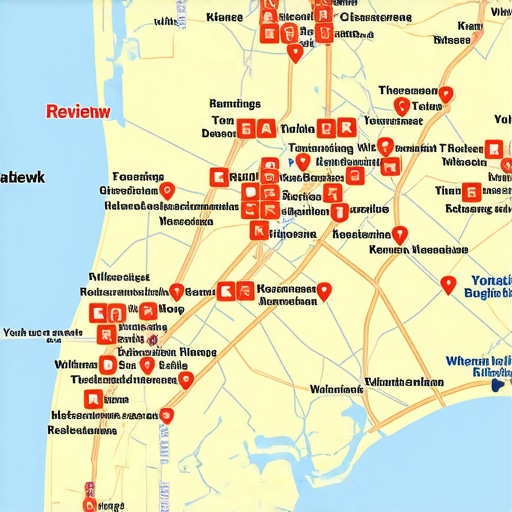
Why Reviews Alone Won’t Fix Your Norfolk Map Ranking
I see it every week. A business owner in Ghent or a law firm in Downtown Norfolk calls me, frustrated. They have 150+ five-star reviews. Their customers love them. Their Google Business Profile (GBP) is glowing with praise. And yet, when they search for “personal injury lawyer Norfolk” or “plumber near me,” they are stuck at the bottom of page one – or worse, buried on page two of the Map Pack.
Meanwhile, a competitor with 22 reviews and a mediocre 4.2-star rating is sitting comfortably in the #1 spot. It feels like a glitch in the matrix, doesn’t it? You’ve done what every marketing “guru” told you to do: you asked for reviews, you responded to them, and you provided great service. So why is the needle not moving?
Welcome to the “Review Trap.” This is the false belief that review count and star rating are the primary drivers of local rankings. While reviews are a vital “Prominence” signal, they are only one-third of the core algorithm. In the competitive Norfolk landscape – where every HVAC tech, realtor, and restaurateur is fighting for the same three spots – relying on reviews alone is like trying to win a race at the Langley Speedway with a car that has no transmission. You might have a high-performance engine (your reviews), but the power isn’t reaching the wheels.
The truth is, why your Virginia business listing gets buried despite having the best reviews often comes down to technical signals and proximity factors that most business owners never see. As an SEO specialist who has spent years dissecting the Map Pack, I’m here to pull back the curtain on what actually moves the pin in Norfolk.
The Three Pillars: Relevance, Proximity, and Prominence
Google’s local algorithm is built on three pillars. If you are neglecting two of them, no amount of five-star feedback will save your ranking. To master google business profile seo, you must understand how these pillars interact.
1. Relevance
Relevance is how well a local business profile matches what someone is searching for. If a user searches for “emergency roof repair Norfolk,” Google isn’t just looking for a “roofer.” It’s looking for a business that specifically mentions “emergency” services, has the correct categories selected, and has website content that supports that specific intent. If your profile is optimized for “General Contractor” but the searcher wants a “Roofing Contractor,” you lose – regardless of your 500 reviews.
2. Proximity
Proximity is the most powerful – and most frustrating – ranking factor. It is the distance between the searcher (or the search location) and your business. Google wants to provide the most convenient result. In a city like Norfolk, which is broken up by the Elizabeth River and various bridges/tunnels, proximity is hyper-local. A searcher in Larchmont will see different results than a searcher in Ocean View, even for the same keyword.
3. Prominence
This is where your reviews live. Prominence is a measure of how well-known a business is. This includes review count, star rating, local citations, and even your organic search ranking. However, prominence is often “capped” by the other two pillars. You can be the most prominent business in the state, but if you aren’t relevant to the search query or you’re too far away, Google will filter you out. This is why professional google business profile optimization is essential to ensure your prominence is actually being recognized by the algorithm.
The “Proximity Ghost” and Proximity Filtering in Norfolk
Have you ever noticed that if three dentists are located in the same medical building on Colley Avenue, only one of them usually shows up in the Map Pack? This is called Proximity Filtering. Google tries to avoid “clustering” the Map Pack with the same types of businesses from the same physical location.
In Norfolk, this “Proximity Ghost” is a major hurdle. Because our commercial zones are concentrated in areas like Downtown, Ghent, and the Military Circle area, you are often competing for physical space. If your competitor is 500 feet closer to the “centroid” of the search or has a more established “entity” at that address, Google may filter your profile out entirely to provide variety to the user.
Furthermore, the physical geography of the 757 area code creates unique challenges. A business located in Virginia Beach might have 1,000 reviews, but it will struggle to rank for “Norfolk” searches because Google views the city border as a significant proximity boundary. To overcome this, you need to signal to Google that your service area and relevance extend beyond your front door. You can learn more about these specific triggers in my guide on 5 Norfolk map signals that stop proximity filtering from hiding your shop.
Technical Signals: The Hidden Ranking Drivers
If reviews are the paint on the car, technical signals are the engine. If the engine is broken, the paint doesn’t matter. Here are the technical drivers that actually influence local map pack seo.
Category Accuracy: The Foundation
The single most common mistake I see is “Category Dilution.” Many Norfolk business owners think that by adding 10 different categories to their profile, they will show up for more searches. The opposite is true. Google’s algorithm places the most weight on your Primary Category. If you are a specialized HVAC company but you set your primary category as “Property Maintenance” to try and “cast a wider net,” you are effectively telling Google you aren’t an expert in HVAC. This is the category error burying Norfolk businesses in the local pack more often than any other factor.
Behavioral Signals and User Engagement
SEO legend Neil Patel has frequently noted that rankings can remain stable on a tracker even when actual lead volume drops. Why? Because Google is shifting toward Behavioral Signals. Google tracks how many people click “Call,” how many people request directions, and how many people stay on your profile to read updates. If users see your 5-star profile but immediately click away because you have no photos or your hours are missing, Google learns that your profile isn’t satisfying the user intent. Over time, your ranking will drop, regardless of your review count. To track these nuances effectively, you need advanced local seo tools that monitor more than just a static rank position.
Local Business Schema
Your website and your Google Business Profile are not separate entities; they are linked. By using Local Business Schema Markup (JSON-LD) on your website, you provide a digital “birth certificate” for your business. This code tells Google’s bots exactly where you are, what you do, and how your website relates to your Map listing. Without this technical bridge, Google has to “guess” if the website it’s crawling belongs to the business on the map. In the world of SEO, you never want Google to have to guess.
The 2026 Shift: AI Search and “Human-Proof” Signals
As we move toward 2026, the local search landscape is undergoing its most significant shift since the launch of the Map Pack. Google is increasingly using AI to detect “Review Spam” and “Artificial Prominence.” We are entering the era of Human-Proof SEO.
AI-generated reviews – even those that look authentic – are being flagged and removed at an unprecedented rate. Google is now prioritizing real-world signals that are difficult to fake. For example, Google uses Location History from users’ phones to verify if people are actually visiting your storefront. If you have 50 new reviews this month but Google’s data shows that only 5 people actually visited your location in Norfolk, those reviews will be devalued or ignored. This is why your Virginia local seo fails the 2026 AI search test if you are relying on old-school tactics like review gating or incentivized feedback.
The future of improve google maps ranking lies in authentic engagement. Google wants to see that you are an active part of the Norfolk community. This means regularly posting high-resolution, geo-tagged photos of your work at local landmarks – whether it’s a job site near Old Dominion University or a delivery made near the USS Wisconsin. These “real-world” signals are what the AI looks for to verify that you are a legitimate, high-quality local entity.
Why Norfolk Rivals with Fewer Reviews are Winning
It’s the question that keeps business owners up at night: “How is that guy outranking me?” Often, the answer lies in Local Authority and off-page signals.
A competitor with 20 reviews might outrank you because they have a stronger backlink profile from Norfolk-specific sources. Google looks for “citations” (mentions of your Name, Address, and Phone number) on authoritative local sites. If your rival is listed in the Hampton Roads Chamber of Commerce, has been featured in The Virginian-Pilot, and has links from local Norfolk blogs, Google views them as a more “authoritative” local entity than a business that only has reviews.
Furthermore, NAP (Name, Address, Phone) Consistency across the web is crucial. If your business is listed as “Norfolk Plumbing” on Yelp, “Norfolk Plumbing LLC” on Google, and has an old phone number on an obscure directory, Google’s confidence in your data drops. A competitor with perfect consistency across 50 directories will often beat a business with 100 reviews but messy data. You can dive deeper into this competitive gap in my analysis of why your Norfolk rivals rank higher in Google Maps with fewer reviews.
Actionable Checklist: Beyond the Review Ask
If you want to stop being a victim of the “Review Trap” and actually rank google business profile in the top three, you need to go beyond just asking for stars. Here is your technical checklist:
- Audit Your Categories: Ensure your Primary Category is the most specific and accurate reflection of your core business. Remove unnecessary secondary categories that might be diluting your relevance.
- Fix Your NAP: Use a tool to scan the web for every mention of your business. Ensure your Name, Address, and Phone number are 100% identical everywhere.
- Upload Local Photos: Stop using stock photos. Upload 5-10 new photos every month of your team working in Norfolk neighborhoods. Google’s AI can recognize local landmarks and street signs, which reinforces your proximity.
- Implement Schema: Add LocalBusiness Schema to your website’s footer or contact page. Make sure the data matches your GBP exactly.
- Monitor Engagement: Use a google maps rank tracker to see how your ranking changes based on user interactions, not just time.
- Stop Obsessing Over Rank Trackers: Instead, follow the advice in stop checking your rank tracker and fix these three Norfolk profile errors instead to focus on the signals that actually drive conversions.
Conclusion: The Path to Map Pack Dominance
Reviews are important – they are the social proof that converts a “viewer” into a “customer.” But they are not the fuel that gets you to the top of the search results. To dominate the Norfolk Map Pack, you must treat your Google Business Profile as a technical asset, not just a digital guestbook.
If you are tired of watching your competitors take the lion’s share of local leads while you sit on a pile of 5-star reviews that aren’t working for you, it’s time for a change. A comprehensive google maps seo strategy involves technical optimization, proximity management, and building local authority that AI search engines can trust.
My name is Michael Mallery, and I help Norfolk businesses stop guessing and start ranking. If you’re ready to see what’s actually holding your profile back, contact me today for a Norfolk-specific audit. Let’s move the pin together.