
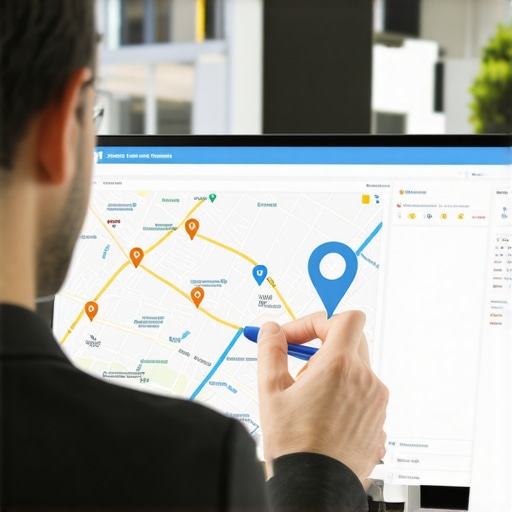
Why Your Virginia Business Listing Audit is Ignoring the One Signal That Actually Moves the Pin
Let’s be honest: most local seo audit reports you receive from agencies are nothing more than a glorified checklist of 2018 tactics. You’ve seen them before – a PDF filled with red and green circles telling you that your NAP (Name, Address, Phone) consistency is 95% or that you forgot to add your secondary category. You spend weeks fixing these minor discrepancies, wait for the “magic” to happen, and yet, your google business profile seo remains stagnant. You’re still stuck at #7 in the map pack, watching a competitor with fewer reviews and a worse website take all the calls.
If you are a business owner in Norfolk, Virginia Beach, or right here in Leesburg, and you’ve “done everything right” but still aren’t ranking, you are a victim of the “Audit Trap.” The truth is that the Google algorithm has evolved far beyond static citations. In 2026, Google’s AI doesn’t care if your “Suite” is abbreviated as “Ste” in one directory. It cares about Behavioral Signals – the “Human-Proof” data that tells the algorithm your business is the most popular, trusted, and relevant choice in your specific Virginia neighborhood.
The “Audit Trap”: Why Traditional Google Business Profile SEO is Failing
The standard local seo audit is broken because it focuses on the “what” instead of the “who.” It focuses on what you’ve typed into a dashboard rather than who is actually interacting with your brand. For years, the industry has preached that if you just optimize your description and get a few citations on YellowPages, you’ll win. That era is over. As a specialist based in Leesburg, I’ve seen Norfolk law firms and contractors lose their map pack positions not because of their website, but because their “Human-Proof” signals were nonexistent.
Google’s 2026 algorithm prioritizes real-world interaction. If your audit doesn’t analyze how users are interacting with your profile compared to your competitors, it’s useless. You are likely Why Your Virginia Business Listing Is Losing to Less Qualified Rivals because they have figured out how to trigger the signals that actually move the pin. They aren’t winning on technicalities; they are winning on engagement.
Section 2: Proximity is No Longer Destiny
One of the biggest myths in google maps seo is that proximity is the king of the mountain. While it’s true that Google wants to show searchers the closest results, we are increasingly seeing the “Proximity Ghost” filter out businesses that are physically closer to the user in favor of businesses that have higher “Prominence.”
In the past, being the closest plumber to a homeowner in Ghent meant you were the #1 result. Today, if a plumber three miles further away has a higher velocity of direction requests and a better click-through rate, Google will “stretch” the map to show them instead of you. This is why you need a professional google maps ranking service that understands how to override the proximity filter. If you don’t have enough prominence, Google simply hides your pin because it doesn’t believe you are the best answer for the user’s intent.
You need to learn How to tell if your Norfolk map pin is being filtered by a proximity ghost. If your rankings drop off a cliff the moment you move half a mile away from your office, you have a prominence problem, not a proximity problem. Behavioral signals are the only way to expand your “ranking radius” beyond your front door.
Section 3: The “Missing Signal” Revealed: Behavioral Data
So, what exactly is this missing signal? It’s Behavioral Data. This is the collective “vote of confidence” that real humans give your business every time they interact with Google’s interface. While your competitors are busy tweaking their meta descriptions, the winners are using GMB ranking tools to monitor and improve their user engagement metrics.
1. Click-Through Rate (CTR)
When someone searches for “personal injury lawyer Norfolk,” does your listing get clicked, or do they skip over you for the guy with the more compelling photo? Google tracks this. If your CTR is lower than the average for your position, Google will demote you. They want to show the listings that people actually want to click on.
2. “Request Directions” Frequency
This is perhaps the most powerful signal for local businesses. When a user clicks “Directions” in Google Maps, it tells Google that a physical transaction is likely about to happen. This is “Human-Proof” data that cannot be faked by a bot in a server farm. If your rival is getting 50 direction requests a week and you’re getting 5, Google knows who the local favorite is.
3. Dwell Time on the Profile
How long does a user stay on your Google Business Profile? Do they read your updates? Do they scroll through your photos? Do they expand your Q&A section? High dwell time signals to Google that your profile provides high-quality information. If users click your profile and immediately bounce back to the search results, it tells Google you weren’t the right fit.
4. Brand-Name Search Volume
If people are searching for your business by name (e.g., “Lovos SEO Leesburg”) rather than just a generic keyword, your authority skyrockets. This tells Google that you have established “Mindshare” in your community. This is a behavioral signal that moves the pin faster than any backlink ever could.
Section 4: Why Virginia Rivals Outrank You with “Half the Effort”
It’s incredibly frustrating to see a competitor with a 3.5-star rating and a website from 2005 outrank your polished, 5-star business. You might think they are “gaming the system,” but the reality is often simpler: they have higher engagement velocity. It’s not just about the total number of reviews; it’s about the velocity and engagement of those reviews.
Google’s AI is smart enough to recognize The specific reason your Virginia rivals outrank you with half the effort. Often, it’s because they are generating “Human-Proof” content. Real photos taken on a smartphone with GPS metadata (geotags) in Virginia carry more weight than professional stock photos. When a customer uploads a photo of a completed roofing job in Chesapeake, that photo carries a behavioral signal that triggers engagement. Users click on real photos more than stock photos, which increases dwell time and CTR, creating a virtuous cycle of ranking growth.
Most Virginia SEO agencies focus on “On-Site Optimization” as the finish line. In reality, that’s just the starting blocks. If your rivals are getting more calls and more direction requests, they will outrank you every single time, regardless of how many keywords you stuff into your business description.
Section 5: The 2026 “Human-Proof” Test
As we move further into 2026, AI-generated content and bot-driven SEO are becoming rampant. Google’s response has been to double down on “Human-Proof” signals. AI bots are getting incredibly good at spotting “fake” optimization. They can tell when a review is written by a LLM and when a citation is built by a low-quality automation tool.
The only thing AI cannot easily fake is genuine human interaction from a localized IP address. This is Why your Virginia local SEO needs more ‘human’ proof in 2026. Google is looking for signals that originate from real devices moving through the real world. When someone in Norfolk searches for your service, clicks your listing, and then physically drives to your location, that is an “un-fakable” signal of quality.
To compete in this environment, you need local seo software that goes beyond simple rank tracking. You need tools that help you understand the “intent” behind the clicks and help you foster real engagement with your local audience. If your SEO strategy doesn’t include a plan for generating real-world user signals, you are building your house on sand.
Section 6: Actionable Audit Checklist: The Behavioral Edition
Stop running the same old audits. If you want to actually rank google business profile listings in competitive Virginia markets, you need to audit these four behavioral categories:
- Review Click-to-Call Ratios: Are people calling you after seeing your profile, or are they just looking and leaving? A low call-to-view ratio suggests your profile isn’t persuasive enough.
- Brand + Location Search Volume: Use Google Search Console to see how many people are searching for your business name plus your city. If this number isn’t growing, your local brand awareness is stalling.
- Photo Engagement (Views per Photo): Which photos are getting the most views? Usually, it’s the ones showing your team’s faces or your actual office. Double down on what real humans want to see.
- Direction Request Heatmaps: Where are people coming from when they ask for directions? If there are “dead zones” in your service area, you need to target those specific neighborhoods with localized content.
By using a modern google business profile audit tool, you can uncover these hidden metrics. You should also check out 5 Norfolk map signals that stop proximity filtering from hiding your shop to ensure you aren’t being ghosted by the algorithm.
Conclusion: Moving the Pin in Virginia
The days of “set it and forget it” google business profile optimization are gone. If you want to dominate the Norfolk or Leesburg map packs, you have to stop focusing on the signals that Google has deprioritized. NAP consistency and keyword density are the bare minimum; behavioral signals are the competitive edge.
Stop wasting money on audits that tell you what you already know. It’s time to focus on “Human-Proof” data that proves to Google you are the most popular choice in Virginia. Whether you are a law firm in Norfolk or a contractor in Northern Virginia, the path to #1 is paved with user engagement.
Ready to move the pin? Don’t settle for a basic audit. Contact me, Christopher Lovos, for a deep-dive local strategy that focuses on the behavioral signals your competitors are ignoring. Let’s make your business the most prominent name in the Virginia map pack.
Christopher Lovos is a Local SEO strategist based in Leesburg, Virginia, specializing in Google Business Profile optimization for service-based businesses.